


Google Ads Help
Premium advertiser support from self-service and email support to expert consultation
A scalable paid consultation flow that replaces email support with guided, decision-led scheduling.
Roles & Responsibilities
My Role: Senior UX/UI Designer
Responsibilities: End-to-end UX, user flows, interface design, usability testing, cross-functional collaboration
Team: Project Manager, Senior Interactive Designer, and Researcher.
Platforms: Web and Mobile
Location: Remote
Overview
Google Ads Help explored a pilot paid consultation service designed to give high-spend small and medium-sized businesses access to scheduled, one-on-one support with Google Ads specialists. The goal was to introduce a scalable support model that balanced personalized assistance with operational efficiency, while setting clear expectations around eligibility, scope, and cost.
Pilot Context
The pilot targeted advertisers spending $10,000 or more per quarter and launched across select regions, including the United States, Canada, the United Kingdom, Australia, and New Zealand. The experience needed to integrate seamlessly with existing Google Ads workflows.
The Problem
High-value advertisers often face complex campaign and measurement challenges that are difficult to resolve through self-service documentation or asynchronous email support. While these advertisers were eligible for enhanced assistance, there was no clear, reliable way to schedule personalized consultations with Ads Support Specialists.
- Advertisers struggled to resolve high-impact problems efficiently.
- Support teams could not prioritize high-value users effectively.
- Google missed an opportunity to monetize expert support without increasing cost-to-serve
The Solution
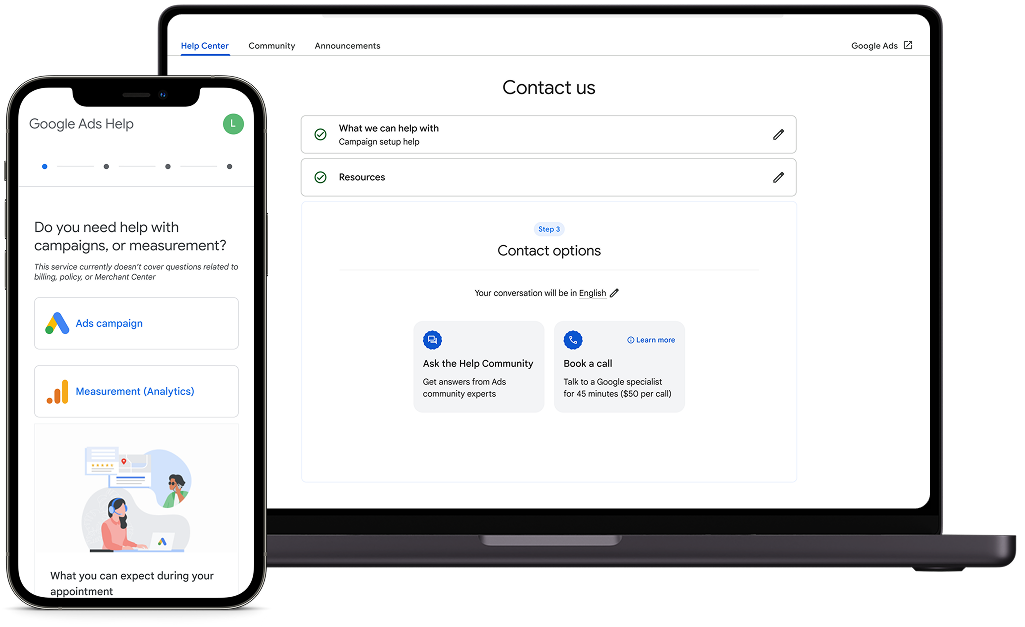
A paid consultation flow integrated directly into the Google Ads Help Center, allowing eligible advertisers to discover, purchase, and schedule one-on-one sessions with Ads Support Specialists.
Current Process / Pain Points
The support flow routes advertisers to generic resources, with email as the only escalation path, creating delays in resolving complex campaign issues.
01
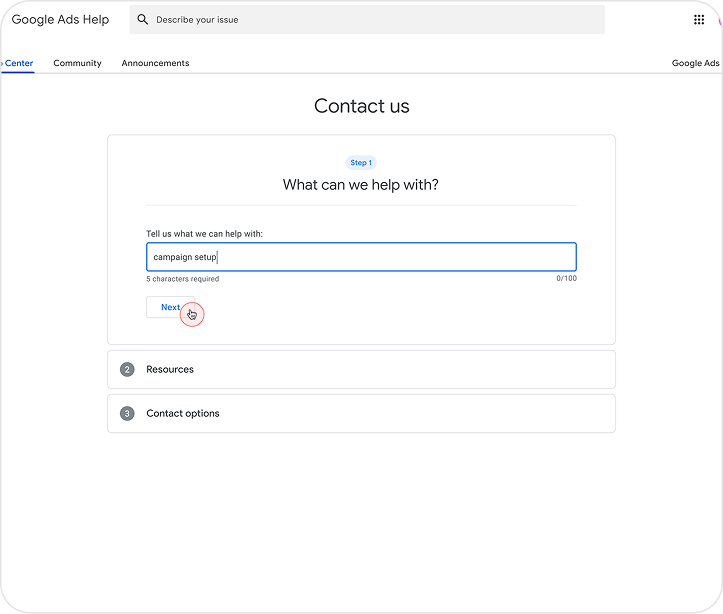

Advertisers search Help Center with no clear path to expert support
02
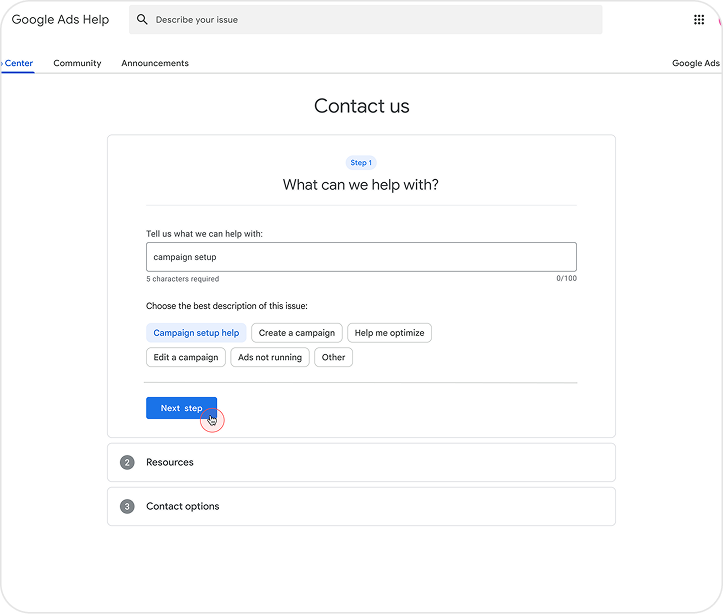
Contact options vary by issue.

03
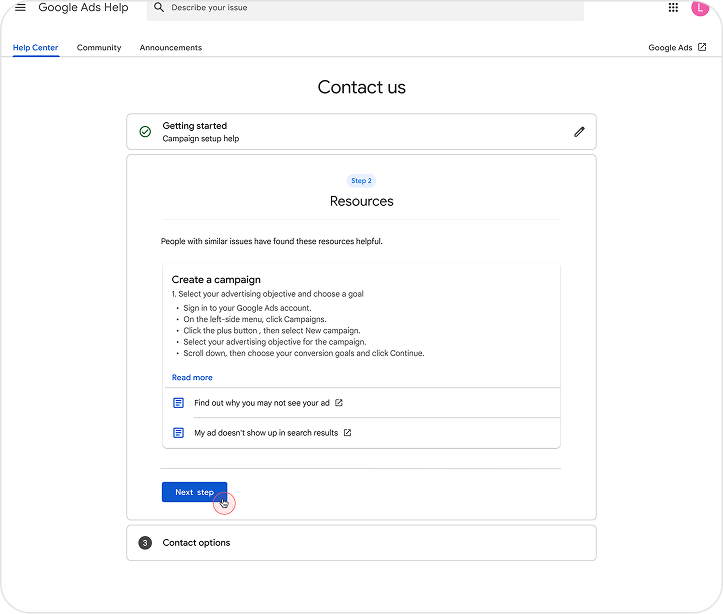
Advertisers are presented with self-help articles
04
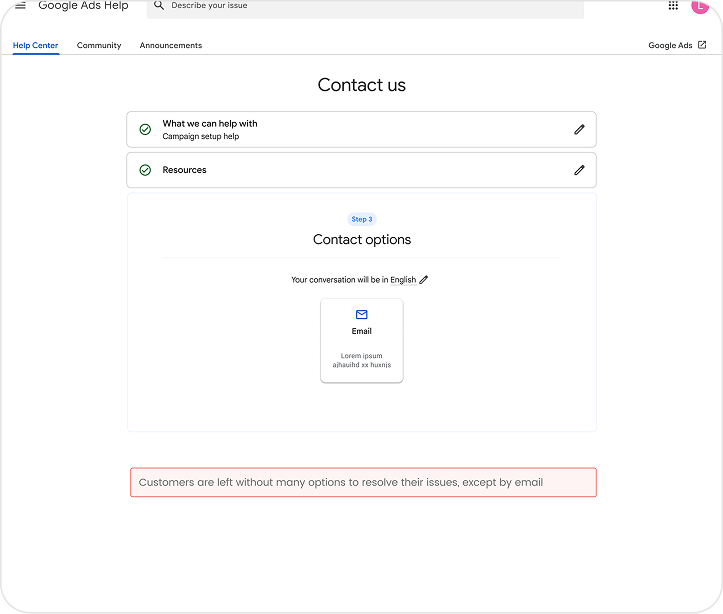
No scheduling visibility or expectation-setting for high-value users
Design Approach
The experience emphasized progressive disclosure and decision support, ensuring users understood whether the service was right for them before committing.
Supporting principles:
- Make eligibility and pricing transparent
- Reduce friction in scheduling and payment
- Preserve trust in Google Ads support experiences
Paid Support Discovery Flow
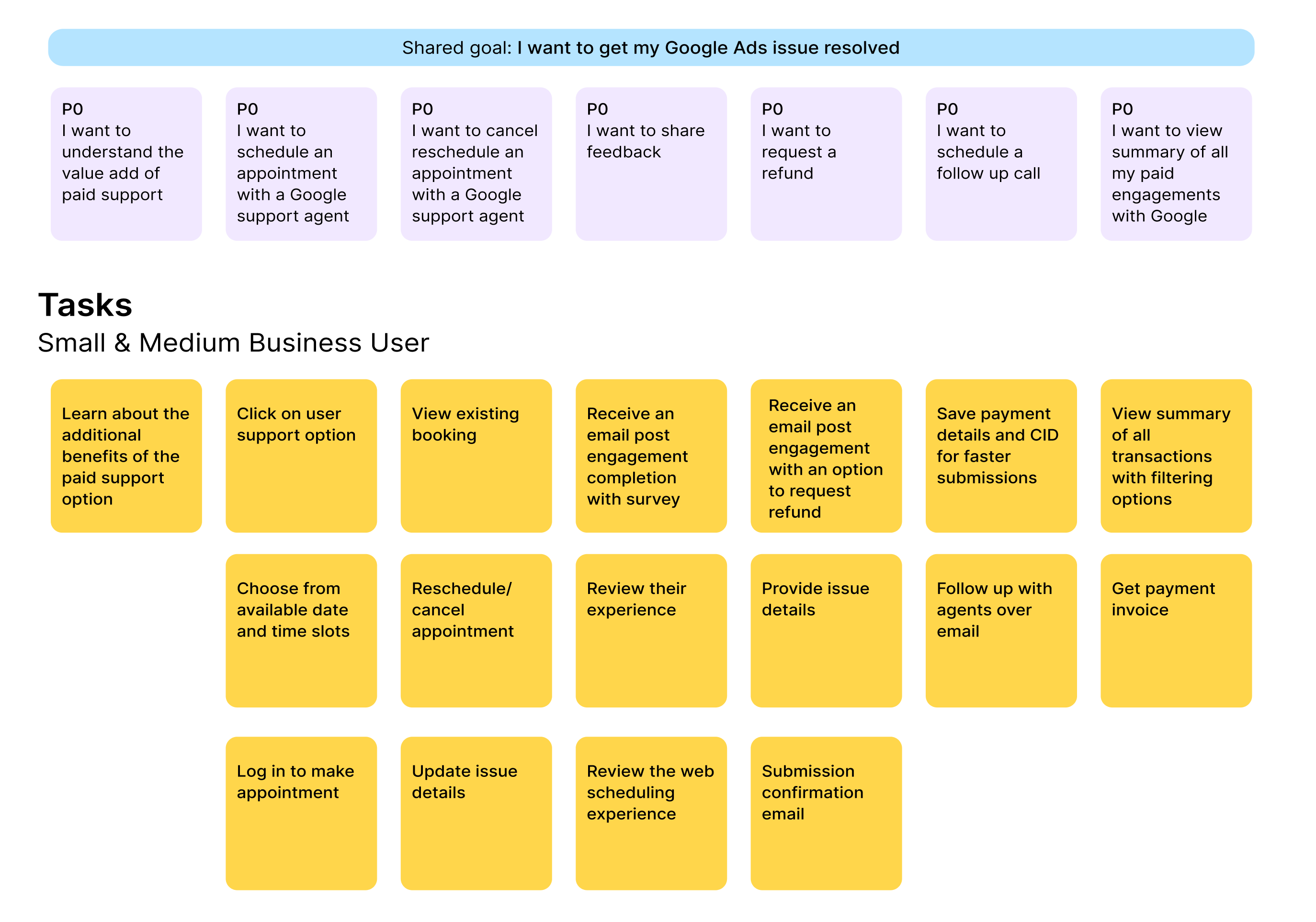
Advertiser identifies eligibility → understands value → selects consultation
Based on existing documentation, we defined user goals, key tasks, and the end-to-end journey to establish a shared understanding.
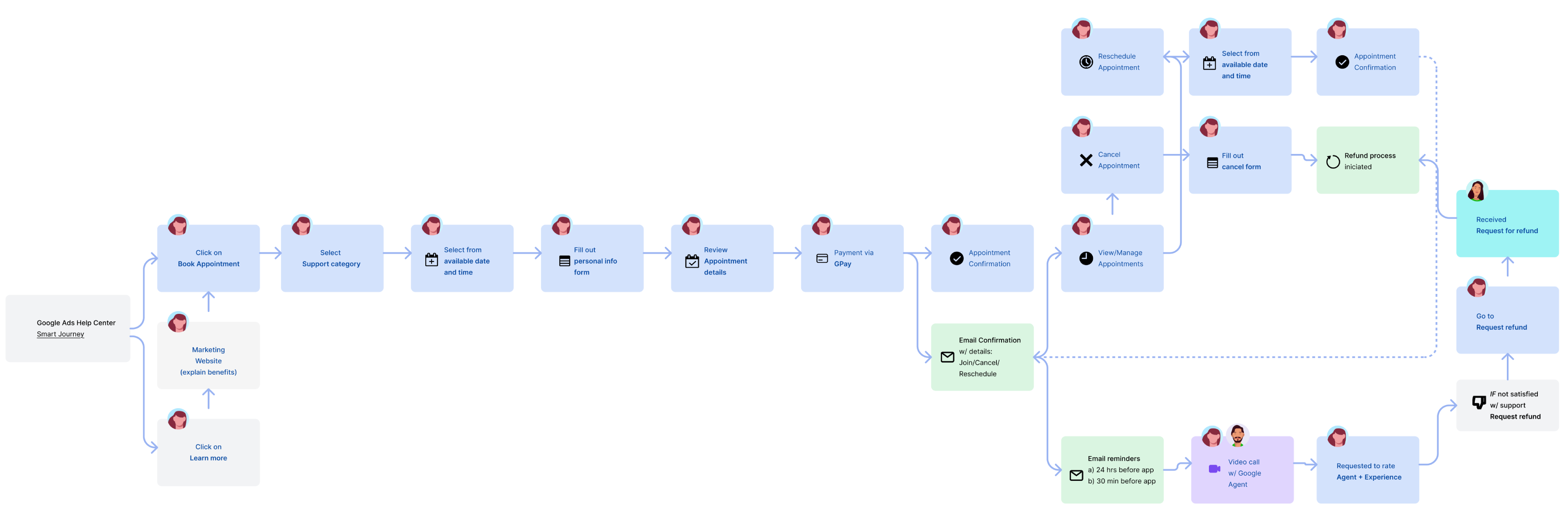
Consultation Scheduling Flow
Select topic → time selection → payment → confirmation → post-session follow-up

 Solution
User Interface Design
The interface was designed to guide advertisers through a clear, low-friction support experience. Early low-fidelity concepts were tested to validate flow, clarity, and expectations, with feedback integrated into the final design. The solution emphasizes clarity, progressive disclosure, and consistent patterns while remaining aligned with Google Ads design standards.
Scenario: Paid Consultation Setup
Web application
An eligible advertiser selects a consultation, completes payment, and schedules a session with an Ads Support Specialist.
Key actions supported:
- Value of paid support
- Clear pricing and scope
- Calendar-based scheduling
 Design Rationale
Clear pricing and consultation scope were emphasized to set expectations upfront and reduce uncertainty before purchase. By clearly communicating what the consultation includes, how long it lasts, and what issues can be addressed, the experience builds trust and helps advertisers decide whether the service meets their needs without requiring additional support or clarification.
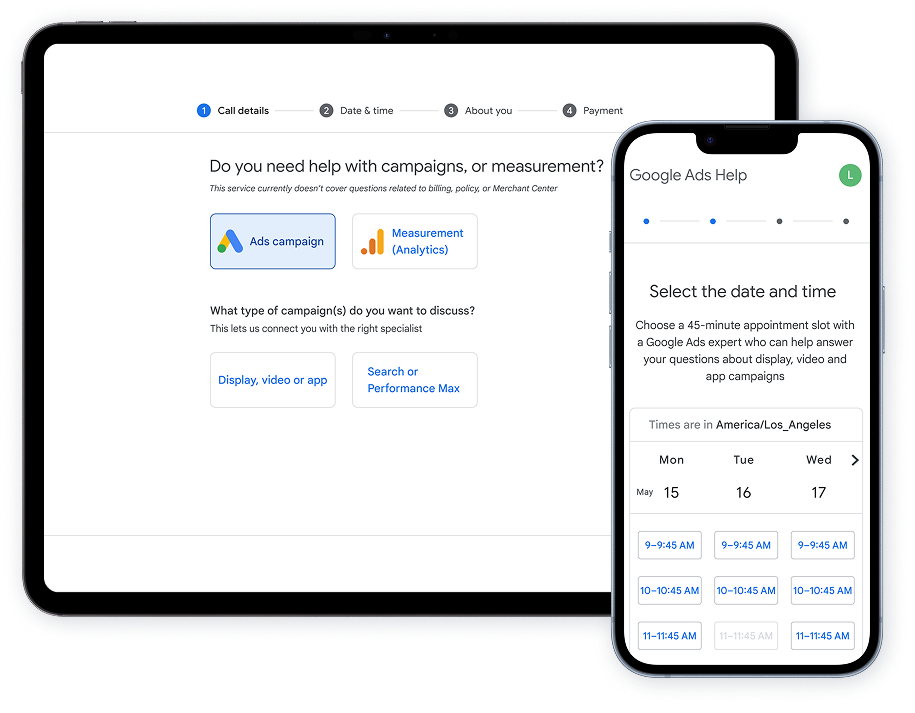
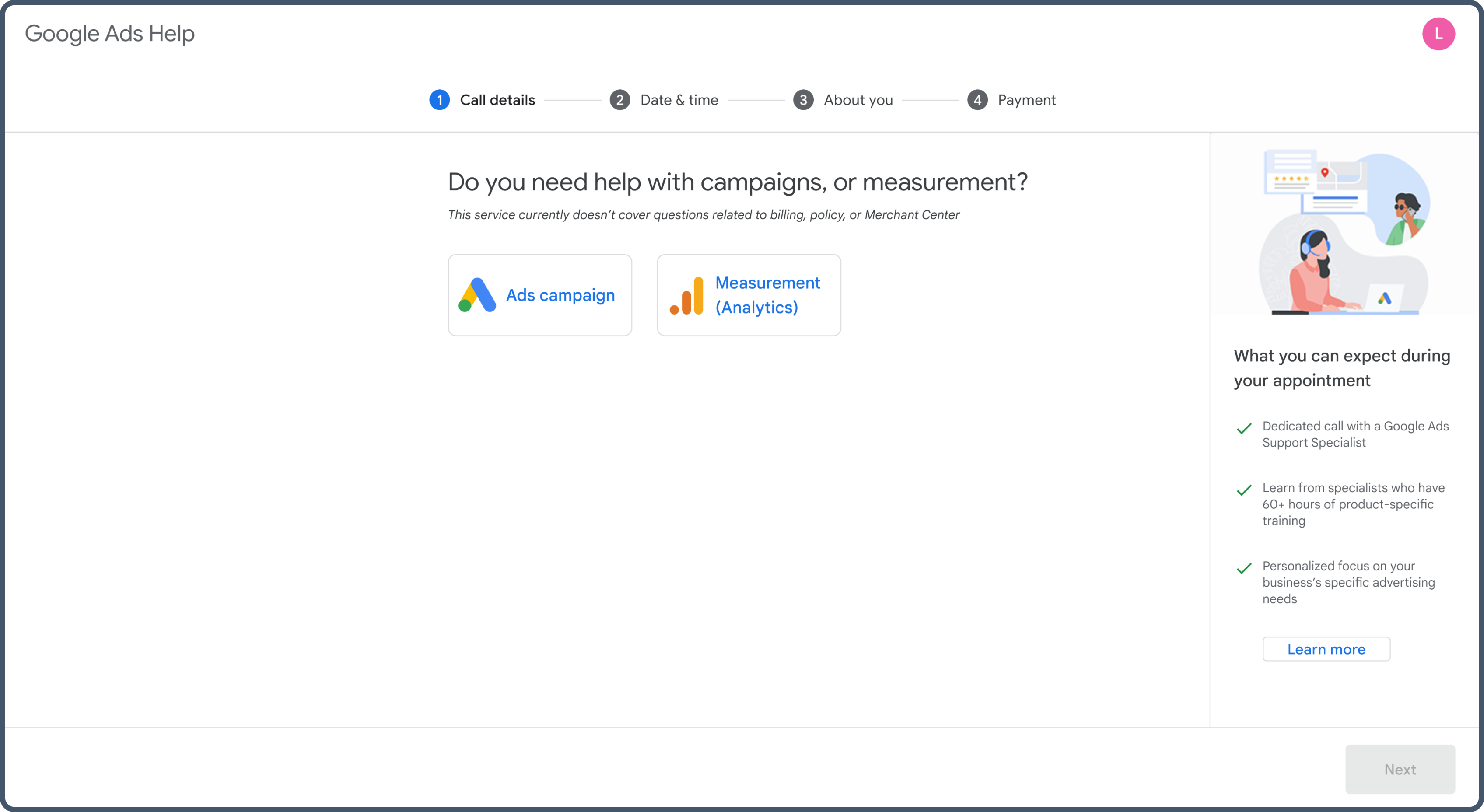
Select support focus
What's happening:
The user identifies the type of help they need, allowing the system to route them to the appropriate specialist.
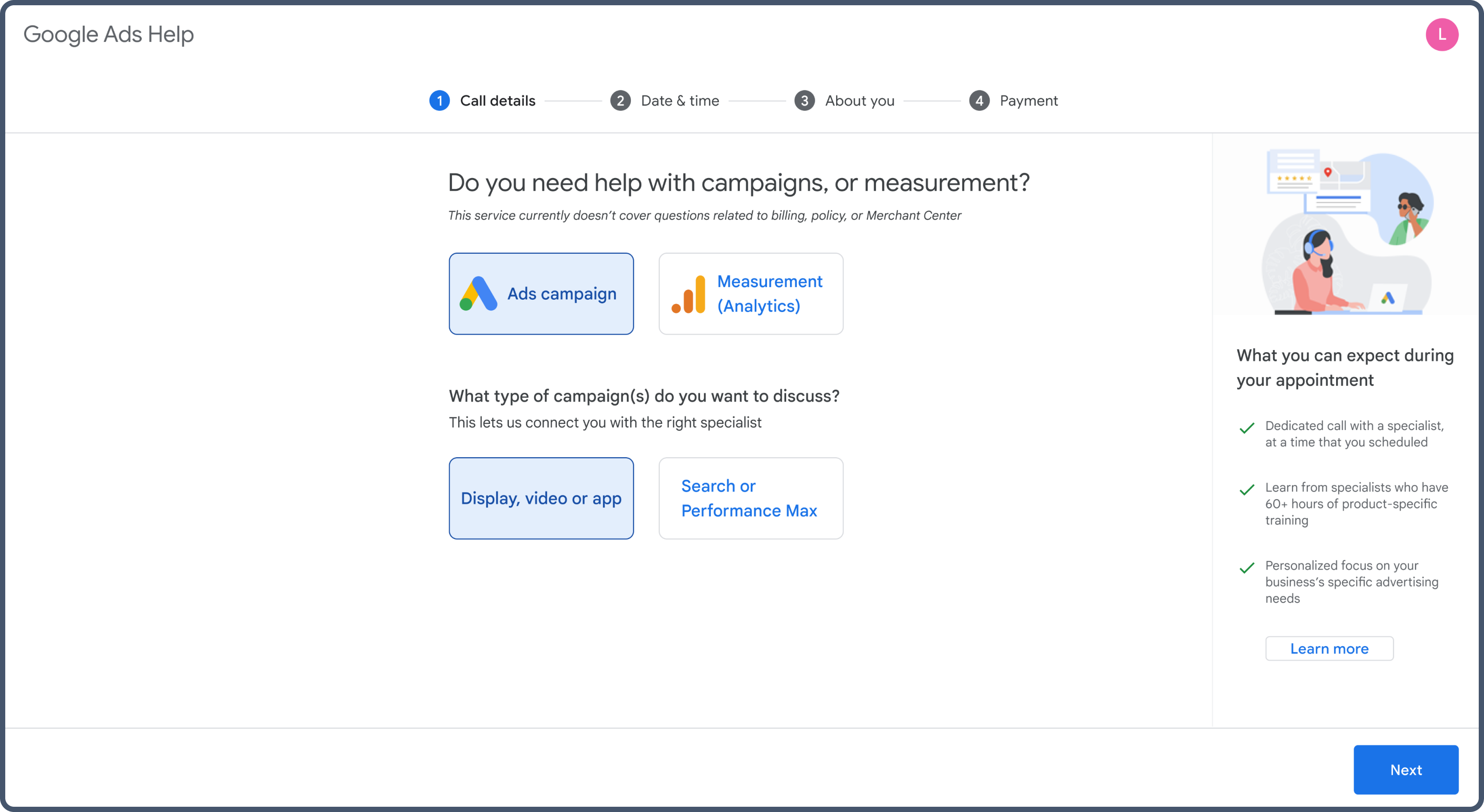
Refine campaign context
What's happening:
The user narrows their request to specific campaign types, ensuring the consultation is relevant and tailored to their advertising setup.
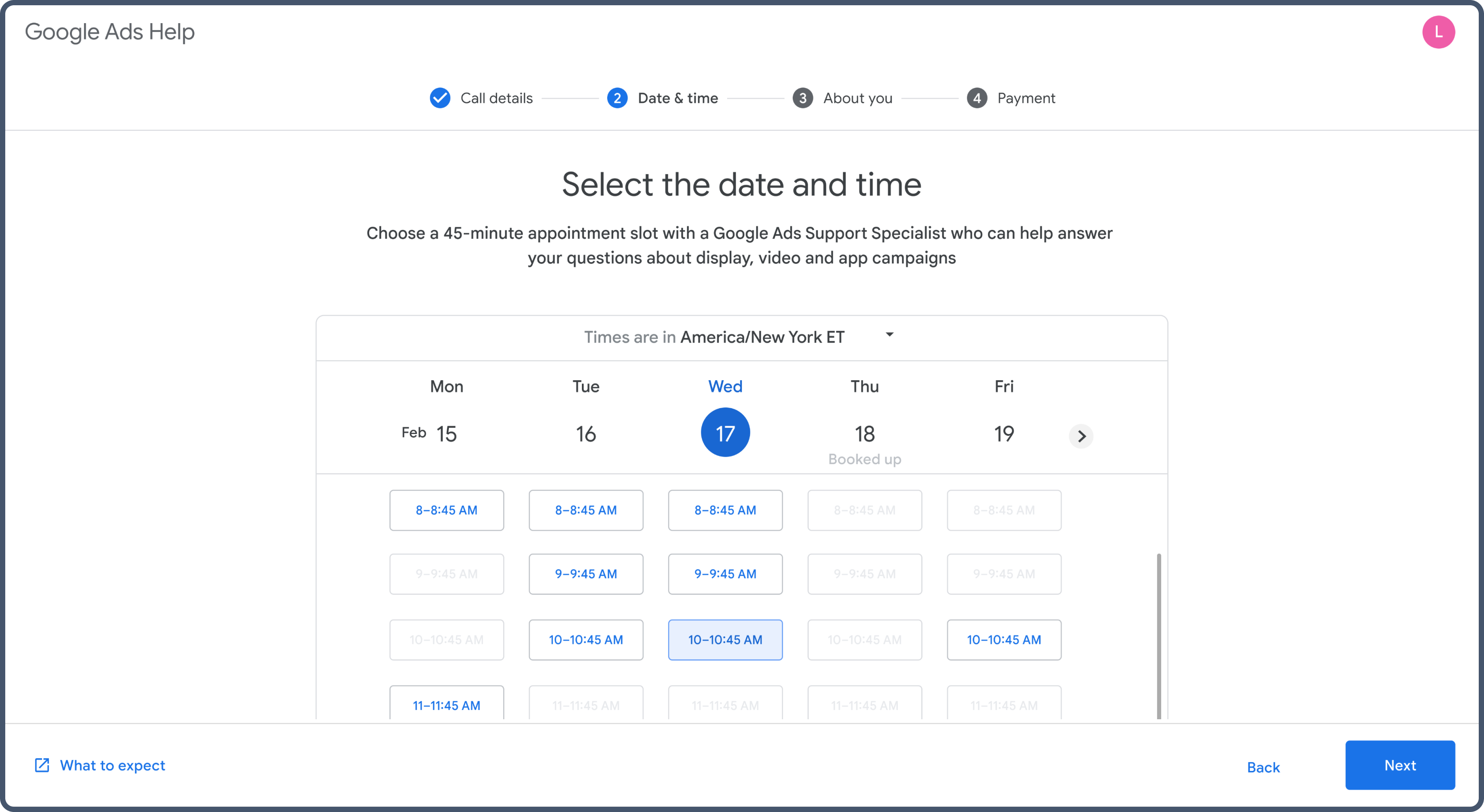
Choose date and time
What's happening:
Available appointment slots reflect specialist availability to support frictionless scheduling.
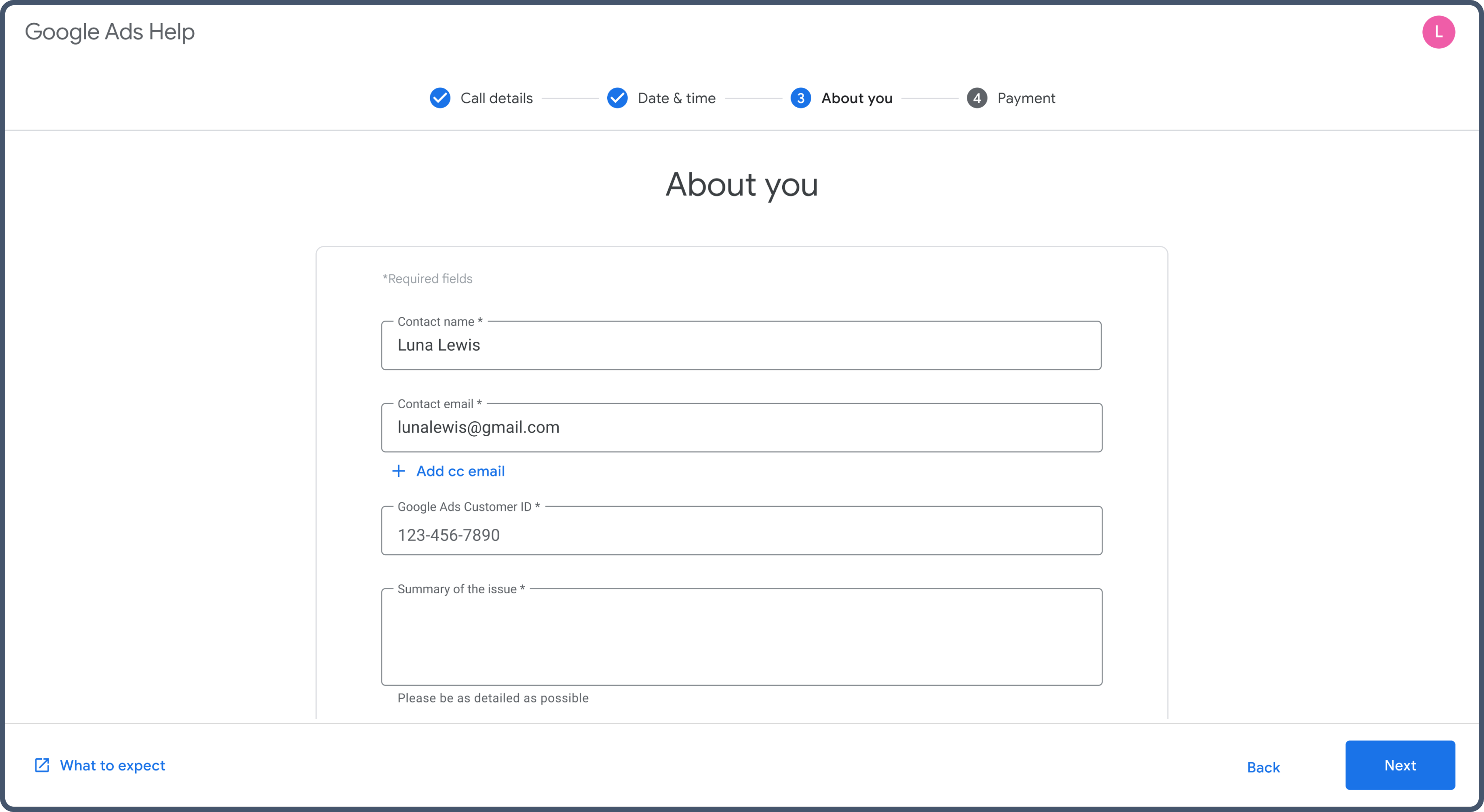
Share account and issue details
What's happening:
The user provides key account information and context upfront, allowing the specialist to prepare in advance and maximize the call.
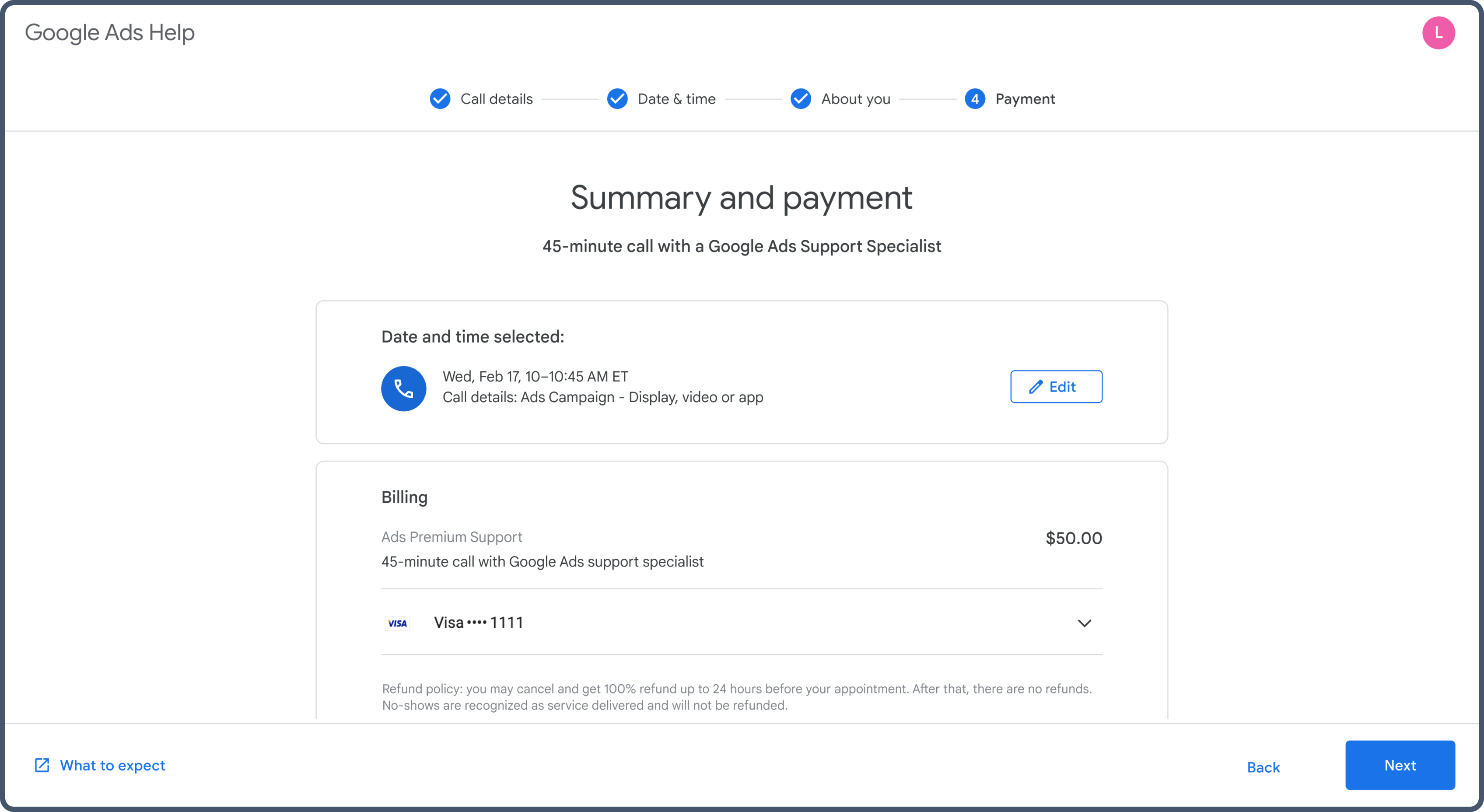
Review and confirm payment
What's happening:
Pricing, refund policy, and appointment details are confirmed in one place before committing to the paid consultation.
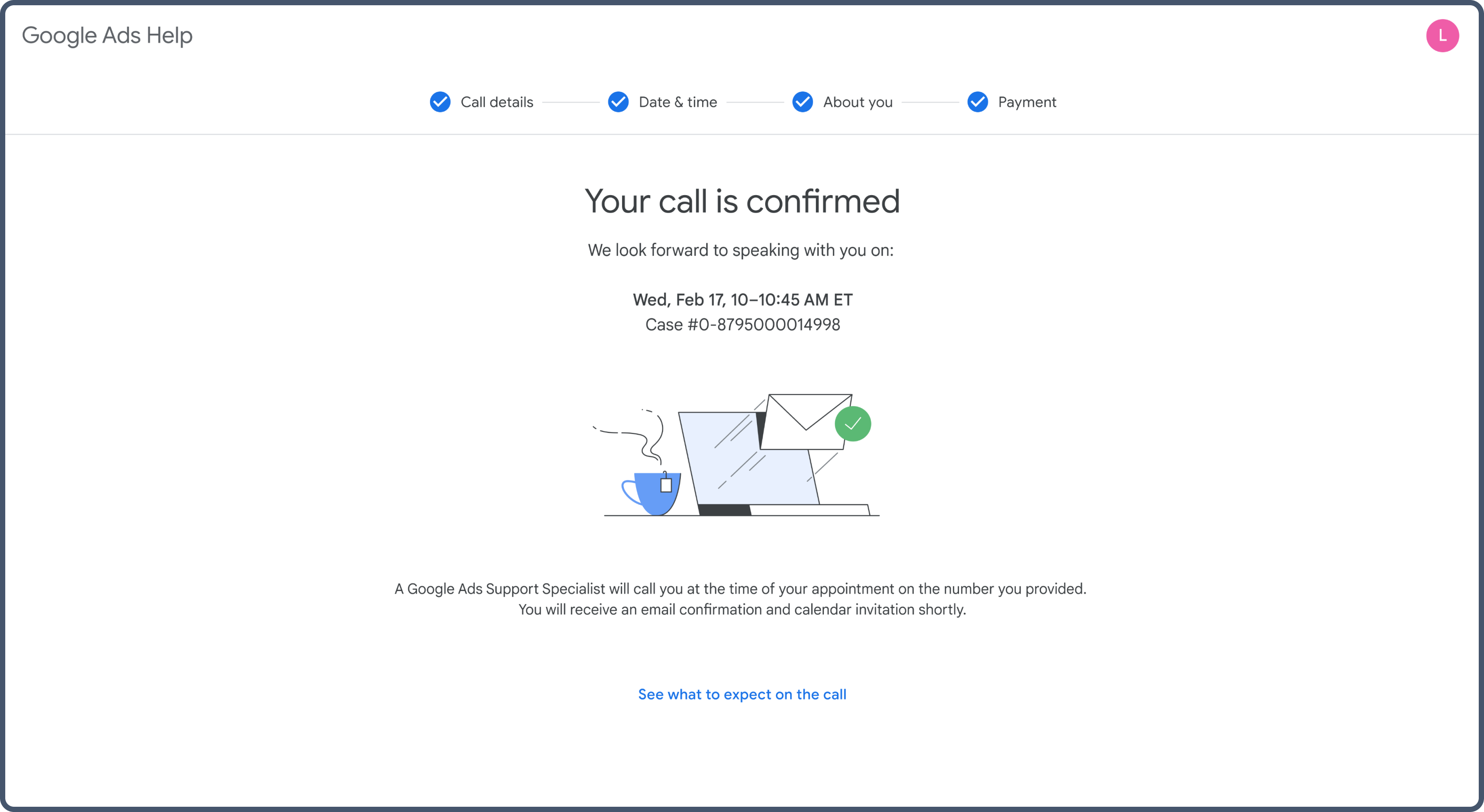
Confirmation and what to expect next
What's happening:
The appointment is confirmed and next steps are clearly outlined, reinforcing confidence ahead of the consultation.
Outcomes & Impact (Pilot)
The pilot validated demand for paid, one-to-one support among high-value SMB advertisers and demonstrated that a structured consultation experience could be introduced without disrupting existing support workflows.
Key outcomes from the pilot included:
- Validated willingness to pay for scheduled consultations when expectations are explicit before checkout.
- Improved clarity and confidence during the support experience through clear eligibility, pricing, and expectation-setting.
- Reduced support costs by routing lower-complexity issues through the Help Community.
Post-Launch Refinement
Post-launch, partnered with product and engineering teams to design and refine edge-case flows—including eligibility changes, cancellations, rescheduling, and error recovery—ensuring reliability, trust, and operational stability beyond the happy path.
Key Learnings
This pilot reinforced the importance of setting clear expectations early in support experiences. Transparent pricing, defined scope, and upfront context collection significantly reduced uncertainty for advertisers and enabled more productive consultations for specialists.
